
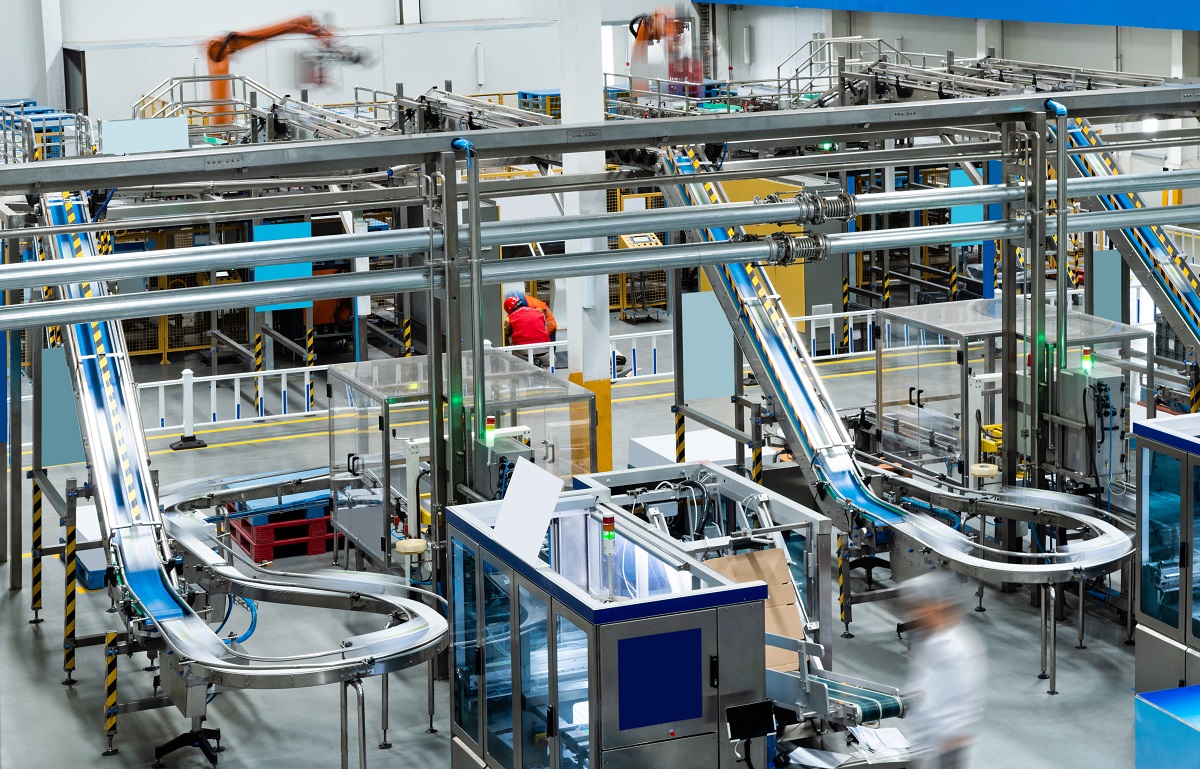
Walk onto any factory floor and you’ll notice the same thing within minutes: efficiency isn’t a buzzword, it’s survival. Every idle minute on a production line, every truck stuck in traffic, every permit that takes three extra weeks, chips away at margins that are already razor-thin. For manufacturers trying to compete regionally or globally, the question isn’t just “how do we make more?” It’s “how do we make more without burning more time, money, and patience?”
The good news is that manufacturing efficiency rarely comes down to a single fix. It’s a combination of smart processes, the right technology, and, often overlooked, the right location. Let’s unpack what actually moves the needle.
Efficiency Starts on the Shop Floor, But It Doesn’t End There
When people think about improving manufacturing efficiency, they usually picture leaner production lines, better machine uptime, or tighter quality control. And they’re not wrong. Lean manufacturing principles, like eliminating waste, standardizing workflows, and empowering workers to flag problems early, still deliver real results decades after Toyota popularized them.
Predictive maintenance is another quiet game-changer. Instead of waiting for a machine to break down (and taking the whole line down with it), sensors now flag wear and tear before it becomes a costly stoppage. Combine that with automation for repetitive tasks, and you free up your workforce to focus on the parts of production that actually need human judgment.
But here’s the part that often gets missed in efficiency conversations: none of this matters if your raw materials are stuck at a port for two extra days, or if your finished goods take six hours to reach the nearest seaport because of traffic and outdated road networks. Operational efficiency inside the factory can only take you so far if the ecosystem around the factory is working against you.
The Hidden Cost of the Wrong Location
Think about it this way. A manufacturer can invest millions in robotics and still lose money every month because their site sits far from major logistics routes, has unreliable power, or lacks the utilities to support heavy industrial processes. Location decisions are, in many ways, efficiency decisions. They just play out over years instead of hours.
This is where the conversation about industrial land in Indonesia becomes relevant, especially for companies scaling up manufacturing capacity or relocating operations to Southeast Asia. Indonesia’s manufacturing sector has been growing steadily, driven by a young workforce, government incentives for industrial investment, and a strategic position along regional trade routes. But growth potential alone doesn’t guarantee efficiency. The surrounding infrastructure, connectivity, and planning quality still make or break day-to-day operations.
That’s why more manufacturers are looking closely at how an industrial park is designed, not just where it’s located, but how well it’s built to support long-term production goals.
Subang Smartpolitan: A Case Study in Designing for Efficiency
One example worth understanding is Subang Smartpolitan, a 2,717-hectare integrated industrial development in Subang, West Java, developed by PT Surya Semesta Internusa Tbk (SSIA) under the Suryacipta brand. It sits roughly 89 kilometers east of Jakarta, and while that distance might sound modest on a map, what matters more is what surrounds it.
Subang Smartpolitan is positioned within a corridor connected to some of Indonesia’s most significant infrastructure projects: Patimban Seaport for export and import logistics, Kertajati International Airport for air freight and business travel, the Trans-Java Toll Road for overland distribution, passenger and freight railway lines, and eventually the Jakarta–Surabaya High-Speed Train. For a manufacturer, that combination translates into shorter lead times, more predictable shipping schedules, and fewer logistics headaches, all of which directly support manufacturing efficiency rather than working against it.
What sets the development apart, though, is that it isn’t built as a purely industrial zone in the traditional sense. It’s designed around a “live, work, play, and learn” concept, meaning the surrounding area includes commercial spaces, residential neighborhoods, educational institutions, and entertainment facilities alongside the factories themselves. This matters more than it might seem at first glance. Manufacturing efficiency isn’t only about machines and logistics; it’s also about people. A workforce that has access to decent housing, schools for their children, and places to unwind nearby tends to be more stable and more productive than one commuting hours each way or living far from basic amenities.
The development also leans into Industry 4.0 principles, incorporating smart city infrastructure and sustainable planning from the ground up. For manufacturers who are already investing in automation, IoT-enabled equipment, or data-driven production monitoring, operating within an environment that’s built with similar digital and sustainability standards in mind makes integration considerably smoother.
Why Location Strategy Deserves a Seat at the Efficiency Table
If you’re a plant manager or operations director evaluating where to expand or relocate, it’s worth asking a few practical questions: How far is the nearest seaport, and how reliable is the route to get there? Is the power and water supply consistent enough for continuous production? Are there enough skilled workers nearby, and do they have reasonable living conditions? Is the area planned for long-term industrial growth, or will you be fighting for infrastructure upgrades as neighboring competitors flood in?
These aren’t abstract concerns. They’re the same factors that determine whether your efficiency gains on the factory floor actually translate into on-time deliveries and healthy margins. This is precisely why working with established industrial estate developers in Indonesia, ones with a track record of infrastructure planning, utility reliability, and long-term ecosystem development, tends to save manufacturers years of operational friction that no amount of internal process optimization can fully offset.
Bringing It All Together
Manufacturing efficiency isn’t a single lever you pull. It’s a combination of smart internal processes, well-maintained equipment, a workforce that’s supported rather than stretched thin, and, critically, a location that works with you instead of against you. Developments like Subang Smartpolitan illustrate what happens when industrial planning takes all of these variables seriously from the start, connectivity to major ports and highways, a genuinely livable environment for workers, and infrastructure designed around Industry 4.0 realities rather than retrofitted after the fact.
At the end of the day, efficient manufacturing isn’t just about squeezing more output from existing resources. It’s about building an operation, and choosing a home for that operation, that doesn’t require constant compromise just to keep the line moving.


Leave a Reply