
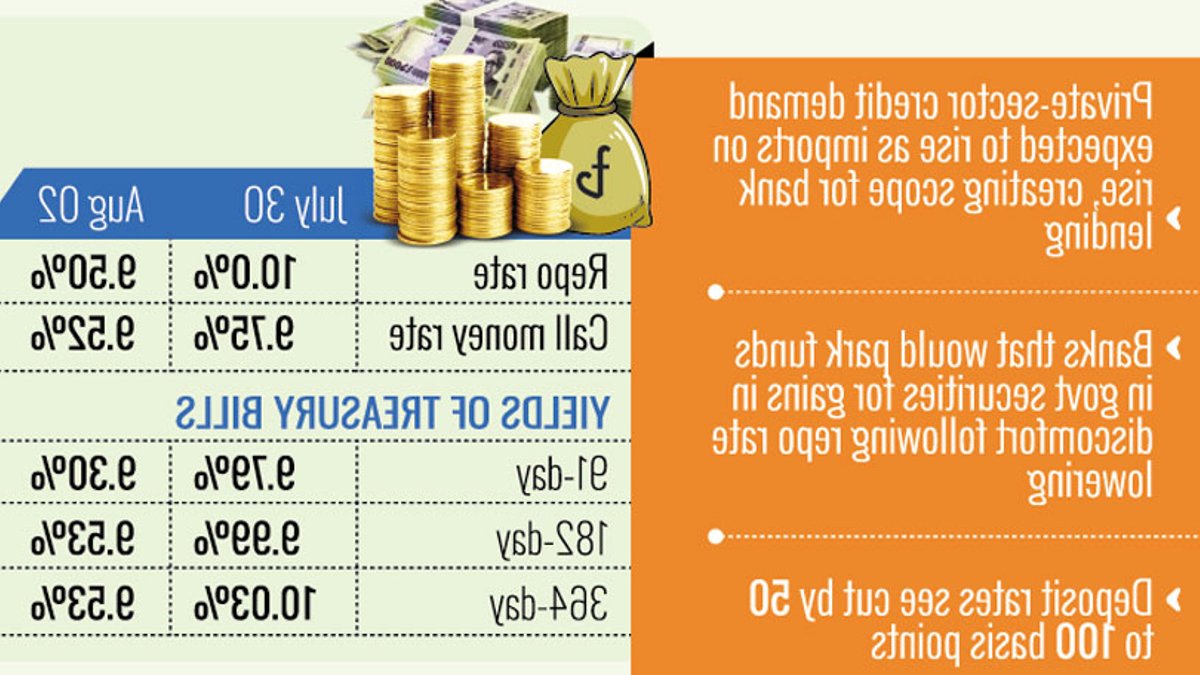
Bangladesh’s central bank reduced its benchmark repo rate for the first time in nearly two years, causing yields on treasury bills, call money, and bank deposits to drop within hours.
Policy cut triggers immediate market reaction
The Bangladesh Bank lowered the repo rate by 50 basis points to 9.50% on July 30 to encourage economic activity after months of sluggishness. The adjustment took effect the following Sunday.
On the first trading day under the new rate, treasury bill yields fell between 46 and 50 basis points. The 91-day bill dropped to 9.30%, while the 182-day and 364-day bills settled at 9.53%, down from 9.79%, 9.99%, and 10.03% the previous week. The government secured Tk 70 billion through these bills to address budget shortfalls.
The interbank call-money rate, where banks lend excess funds overnight, declined 23 basis points to 9.52%. Commercial banks quickly adjusted deposit rates, cutting them by 50 basis points to a full percentage point.
Related: US Closing Missions In Japan And Four Countries
Banks face shrinking risk-free returns
The sharp decline in treasury yields has disappointed commercial bankers, who had depended on government securities for steady returns during the economic slowdown. With fewer secure investment options, banks now face pressure to expand lending.
A central bank official, speaking anonymously, said the rate cut aimed to reduce reliance on risk-free investments like treasury bills and bonds. “The drop in yields signals progress for the economy,” the official stated. “If this continues, banks will need to prioritize lending to the private sector, which is their primary role.”
The treasury head of a private commercial bank, who also requested anonymity, noted that demand for private-sector credit had weakened in recent months. Banks have become more cautious about approving new loans due to rising defaults. “Lending opportunities are scarce right now,” he said.
Government securities had provided one of the few dependable profit sources for banks. With those yields now lower, the banker warned that stagnant private-sector credit growth—worsened by an energy crisis—could harm lenders. “Without a recovery in credit, banks will suffer,” he added.
Related: Timing Is Critical in Crypto Trading
Some institutions have already trimmed deposit rates by up to 100 basis points, though lending rates are expected to adjust more gradually. The banker said his institution reduced deposit rates by 50 basis points but estimated it would take at least three months for lending rates to follow.
If the trend continues, treasury yields may soon match the new policy rate. That shift could push banks to seek higher returns elsewhere, assuming private-sector demand improves. Recent measures, including a Tk 600 billion fund to revive closed industrial units and relaxed monetary policies, may help. Rising imports could also increase demand for trade financing.
The immediate impact has tightened bank margins. With fewer safe investment options, lenders must either accept lower profits or take on more risk.
Economic conditions remain uncertain.


Leave a Reply