
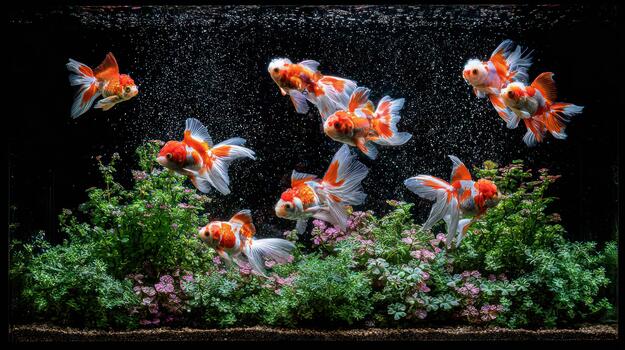
Ask anyone to picture a pet fish, and nine times out of ten, they’ll picture a goldfish — that little flash of orange circling a bowl on someone’s kitchen counter. It’s one of the oldest jokes in the aquarium world too: “just a goldfish,” as if there’s nothing more to say. But spend five minutes around a proper fancy goldfish collection — bubble eyes wobbling past, a ranchu’s smooth curved back catching the light, an oranda’s fluffy “wen” bouncing as it swims — and that joke falls apart pretty fast. Goldfish have been selectively bred for over a thousand years, and the result is one of the most visually diverse groups of fish in the entire aquarium trade.
That long history is exactly why goldfish remain such a dependable category for shops, distributors, and import businesses. They’re hardy, they’re recognizable to every customer who walks through the door, and there’s a variety to fit almost any price point or display tank. If you’re building out an aquatics section or expanding what you bring in for your stores, it’s worth understanding what actually makes a goldfish and how to keep one properly — whether you’re stocking a single tank or sourcing container loads. That’s also where the choice of partner comes in: working with an established ornamental fish exporter makes it much easier to get consistent, healthy stock at scale instead of piecing orders together from multiple sources. For a look at the range of species available for wholesale and retail supply, Aquazone Indonesia has built its catalog around exactly that kind of breadth.
A Fish With a Very Long Résumé
Goldfish (Carassius auratus) started out in China over a thousand years ago as a domesticated form of the wild carp, prized for a rare genetic mutation that turned their scales gold and orange instead of the usual muddy olive. Monks and later imperial households began breeding them in ponds purely for their color, and from there, things escalated. Fins got longer. Bodies got rounder. Eyes started pointing in strange new directions. By the time goldfish reached Japan and eventually Europe, dozens of distinct “fancy” varieties had already emerged — each one essentially a living record of centuries of selective breeding.
That backstory matters for buyers because it explains the sheer range you’re working with. A single goldfish order can include everything from a lean, fast-swimming comet that thrives in an outdoor pond, to a slow, round-bodied ranchu that needs a carefully controlled indoor tank. Knowing the difference helps you match the right fish to the right customer and the right setup.
Getting to Know the Main Types
There’s no need to memorize all fifty-plus recognized varieties, but a few categories come up constantly in the trade:
- Common and Comet Goldfish — The classic single-tailed, streamlined body types. Extremely hardy, affordable, and popular for ponds and starter tanks.
- Shubunkin — Known for its calico pattern of blue, red, orange, and black speckling. A single-tailed variety that’s just as tough as the comet but a lot more colorful.
- Oranda — Recognizable by the raspberry-like “wen” growth on its head. A rounder body and slower swimmer, best suited to a dedicated indoor aquarium.
- Ryukin — A tall, humped-back body shape with flowing fins, prized for its dramatic silhouette.
- Ranchu — Sometimes called the “king of goldfish,” it has no dorsal fin and an arched back, giving it an almost regal profile.
- Bubble Eye and Celestial Eye — Novelty varieties with fluid-filled sacs or upward-pointing eyes. Delicate, but always a conversation-starter in a display tank.
Each type comes with its own care quirks, which is exactly what your sales staff or care sheets should be flagging to customers at the point of sale — it saves a lot of return visits and unhappy phone calls down the line.
The Basics of Keeping Them Healthy
Goldfish have an unfair reputation for being disposable, low-maintenance pets, and that reputation is honestly part of why so many of them don’t survive their first year in a poorly set-up bowl. In reality, they’re messy, fast-growing fish that need more space and filtration than people expect.
A few fundamentals that hold true across almost every variety:
- Space. A single fancy goldfish needs at least 20 gallons, and single-tailed types like comets grow large enough to eventually need a pond or a very large tank.
- Filtration. Goldfish produce a surprising amount of waste for their size, so a filter rated well above the tank’s actual volume is worth the investment.
- Water temperature. Most goldfish prefer cooler water, generally between 65–72°F (18–22°C) — they’re one of the few ornamental species that don’t need a heater in most climates.
- Diet. A varied diet of quality pellets, occasional vegetables, and the occasional protein treat keeps colors vibrant and digestion smooth. Overfeeding is the single most common mistake.
- Tank mates. Slow-moving fancy varieties do best with equally calm companions — pairing a bubble eye with a fast, nippy tankmate rarely ends well.
None of this is complicated, but it’s the kind of information that turns a first-time goldfish buyer into a repeat customer rather than a refund request.
Sourcing Quality Stock for Your Business
For importers, wholesalers, and retail chains, the real challenge isn’t understanding goldfish — it’s finding a consistent, healthy supply of them at scale. Fish that arrive stressed, underweight, or carrying disease cost far more in losses and customer complaints than they ever save on price. Consistent quarantine practices and water-quality standards at the breeding facility translate directly into lower mortality after shipping, which is exactly the kind of detail worth checking before you commit to an order.
Indonesia has long been one of the world’s major breeding hubs for ornamental fish, and businesses browsing freshwater fish for sale for their next order will find goldfish sitting alongside hundreds of other tropical and coldwater species bred specifically for export. Aquazone Indonesia’s freshwater fish catalog is a useful place to see how that breadth plays out — goldfish varieties sit next to community fish, cichlids, and more specialized species, giving buyers a single source to build a fuller product range rather than juggling multiple suppliers.
Beyond the Goldfish Tank
If your stores are looking to diversify past the usual goldfish and tetra lineup, it’s worth knowing there’s a growing appetite among hobbyists for more unusual, higher-value freshwater species. One example making waves in aquascaping and specialist circles is the Blue Pulchra (Channa pulchra), a strikingly colored snakehead native to Myanmar’s rivers, known for its electric blue fins and dark speckled body. It’s a completely different animal from a goldfish — a predatory species that needs its own species-specific setup — but it illustrates the kind of niche demand that can boost margins for stores willing to stock something beyond the basics. Exporters with broad species lists are usually well placed to help you test the waters with smaller, specialty orders like this alongside your core goldfish stock.
What to Look for in an Export Partner
Whatever mix of species you’re bringing in, the partnership behind the shipment matters as much as the fish themselves. A few things worth prioritizing when you’re evaluating suppliers:
- Personalized consultation — a supplier willing to talk through which species and varieties actually fit your local market, rather than just filling an order form.
- All-in-one export handling — paperwork, permits, and logistics coordinated on the supplier’s end so you’re not managing five different moving parts.
- Careful packing and water-quality control — the difference between a shipment that arrives thriving and one that arrives stressed usually comes down to how much attention went into the packing process.
- Post-delivery support — a short window to report issues after arrival, with a real resolution process rather than a shrug.
- A long-term view — suppliers who treat the relationship as ongoing tend to be more transparent about availability, pricing, and lead times over time.
Wrapping Up
Goldfish have earned their staying power in the aquarium trade the old-fashioned way: over a thousand years of breeding, endless variety, and a genuine hardiness that makes them forgiving for beginners and rewarding for enthusiasts. For businesses building out an aquatics lineup, the opportunity isn’t just in stocking goldfish — it’s in pairing that reliable category with a supplier who can help you round out the rest of the tank, from classic comets to something as eye-catching as a Blue Pulchra, without the guesswork.


Leave a Reply