
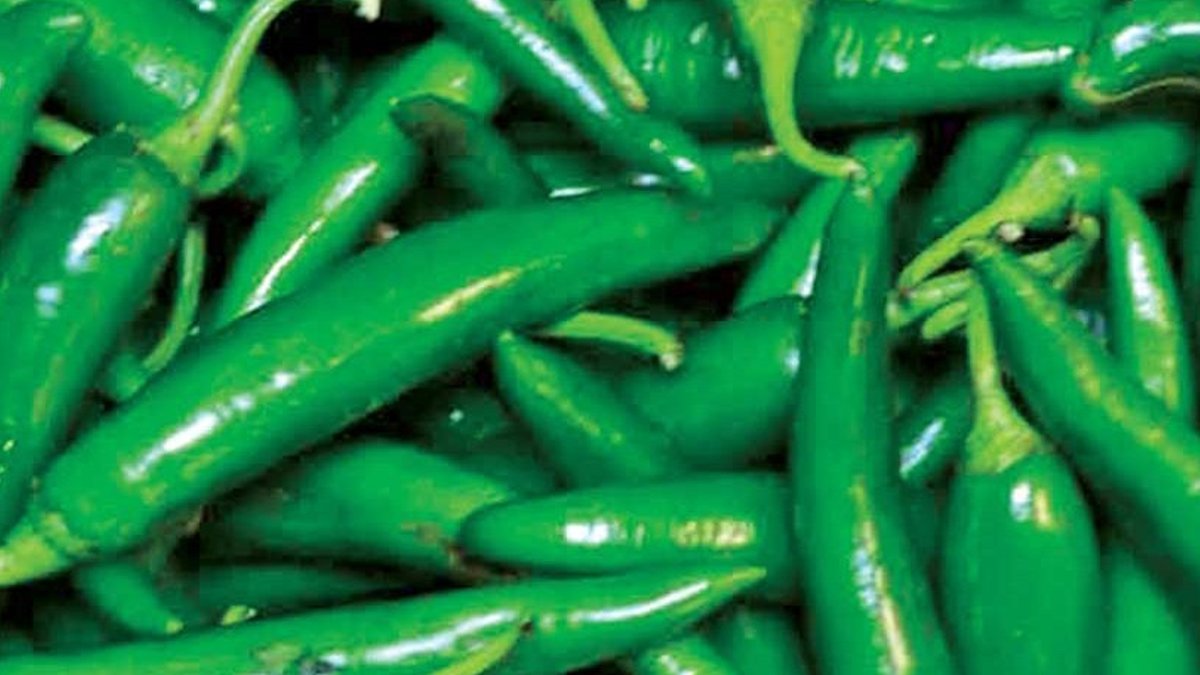
The government has allocated Tk 670 million to produce an additional 50,000 tonnes of green chilli during the lean season, following an unusual surge in prices during the rainy season.
Green chilli prices surged to Tk 380-400 per kilogramme about one and a half weeks ago, according to the Department of Agricultural Marketing.
The Ministry of Agriculture will provide incentives and agricultural inputs to farmers, including seeds, seedlings, fertiliser, rain-protection sheds and other necessary inputs.
Prices later dropped by almost half of the previous price following the government’s decision to allow imports of green chilli.
Green chilli prices had reached a record Tk 800-1,000 per kg during the rainy season in both 2022 and 2023, said Department of Agricultural Marketing assistant director TM Rashed Khan.
Prices usually rise during the rainy season, particularly between June and September, he added.
Bangladesh produces more than 1.57 million tonnes of green chilli annually, with over 80 per cent of the production coming between November and March, according to Department of Agricultural Extension Director General Abdur Rahim.
Annual demand for green chilli is estimated at around 1.62 million tonnes.
Attractive market prices during summer encourage many farmers to cultivate green chilli.
Related: Bangladeshi Cardholders Spend Tk10 Billion Overseas in June
Heavy rainfall, which is common between May and September, often damages the crop, Abdur Rahim further said.
Farmers in Rangpur, Bogura, Mymensingh and Jashore have doubled their green chilli production over the past five years, according to the DAE chief.
The new project will help boost green chilli production during the lean season and reduce the country’s dependence on imports, Abdur Rahim said.
Bangladesh imported nearly 47,000 tonnes of green chilli in FY26, according to the Plant Quarantine Wing of the agriculture ministry.
The country also exported more than 2,500 tonnes of green chilli during the peak harvesting season in January-February, according to the wing.
This development means that the people most affected by the price surge will have a more stable supply of green chilli, as the government’s support to farmers will help increase production during the lean season.
The government plans to provide support to the green chilli farmers from March to November, depending on the agro-climatic conditions of different zones, while households will also be encouraged to produce around 1,200 tonnes of green chilli.
The project aims to address the production gap from summer to autumn, which will ultimately benefit the consumers by reducing their dependence on imported green chilli.


Leave a Reply