
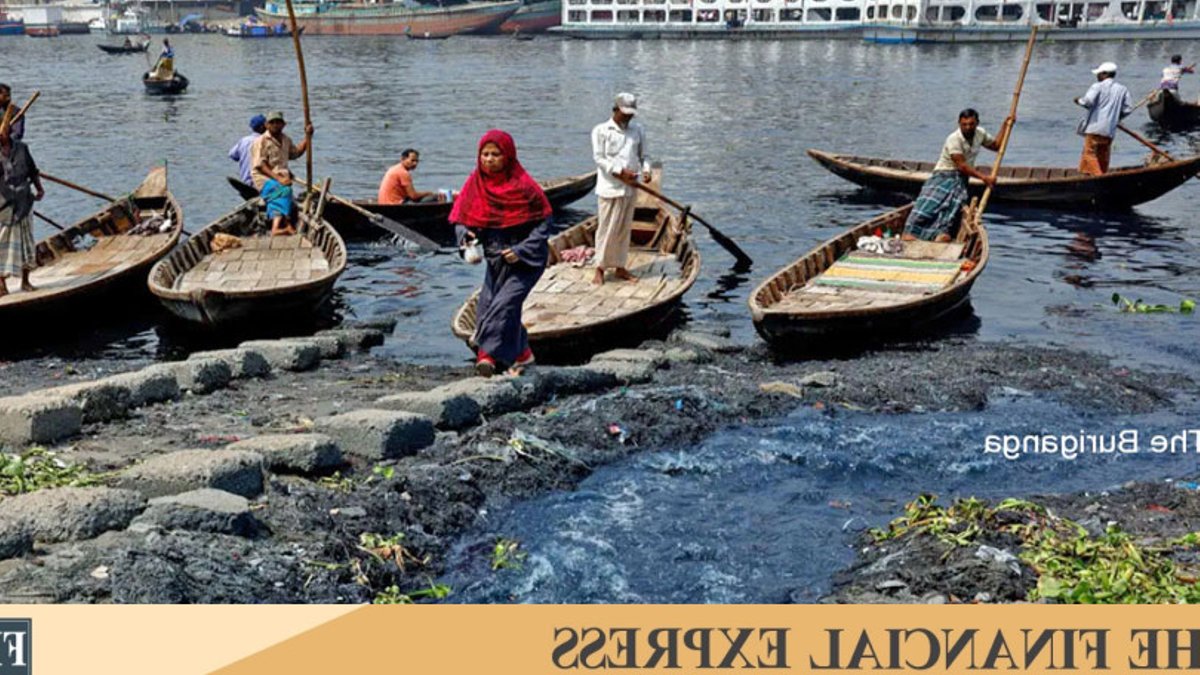
The Buriganga River, once the lifeblood of Dhaka, may finally receive a serious effort to restore it. The Prime Minister has ordered authorities to draft a time-bound action plan to reduce pollution in the Buriganga and other rivers surrounding the capital. An inter-agency committee will oversee the initiative.
The order followed a meeting at the Bangladesh Secretariat, where industrial effluents, poor sewerage and drainage, shrinking canals and mismanagement of solid waste were identified as the main culprits. The Department of Environment, Dhaka WASA, Bangladesh Inland Water Transport Authority, Bangladesh Water Development Board, RAJUK, the two city corporations and district administration are to work together under the supervision of the Prime Minister’s Office.
Dhaka’s history and decline tied to the Buriganga
The river was central to the city’s development. When the Mughals made Dhaka a provincial capital in the early 1600s, the Buriganga provided navigation, defence, communication and access to the trading routes of Bengal. Muslin and foodgrains moved through it, while its water served households and its fish sustained communities. Settlements, markets, warehouses, ghats and structures grew along its northern bank.
Before roads, flyovers and motor vehicles came to dominate the scene, the Buriganga was Dhaka’s road, marketplace, water source and breathing space rolled into one. Today, Sadarghat remains a gateway between the capital and riverine Bangladesh. But the same city that drew life from the Buriganga gradually began treating it as a drain. Unplanned urbanisation, encroachment and industrial expansion brought tanneries, dyeing units and chemical factories to its banks and catchment. Sewage, industrial effluent, biomedical waste, oil, plastic and household garbage then found the easiest way out through drains into the river. Relocation of the Hazaribagh tanneries removed one notorious source, but did not bring the Buriganga back to life. According to the World Bank, more than 80 per cent of Dhaka’s untreated wastewater and sewage enter the interconnected waterways, while over half of the city’s canals have disappeared or remain clogged.
Related: Govt allocates funds to cut chilli prices
A problem with broader consequences
To treat such poisoning as merely an environmental problem would be to miss the wood for the trees. Dhaka is surrounded by the Buriganga, Turag, Balu and Shitalakkhya and was once crisscrossed by canals. Together they formed a natural drainage bowl for monsoon water. When canals are filled and outfalls choked, heavy rain turns roads and neighbourhoods into stagnant pools. Pollution further reduces flow and obstructs drainage. A restored river-and-canal network would, therefore, strengthen flood resilience, reduce waterlogging and help the city cope with heavier rainfall expected from climate change. No number of pumps can permanently compensate for destruction of the natural drainage system on which this deltaic city was built.
The issue is equally one of public health and social justice. People beside the rivers, especially the poor, are exposed to foul air and contaminated water and suffer from skin, respiratory and waterborne diseases. Polluted water also harms fish, livestock and crops and can enter into the human food chain. Meanwhile, dependence on groundwater puts pressure on the aquifers beneath Dhaka. Cleaner surface water would expand the city’s future water-supply options, though it would require treatment.
Past efforts suggest the challenge isn’t a lack of plans. The real test will be implementation. The new plan must combine existing initiatives into a measurable framework, with clear responsibilities, budgets, and deadlines for each agency.
Every pollution source should be mapped, and water-quality data made public in real time. Effluent treatment plants must operate consistently, not just during inspections. Factories should run their own treatment systems, while shared facilities could serve industrial clusters where individual plants aren’t practical. Sewerage, waste collection, and canal maintenance must expand together, with humane relocation for affected communities.
Related: Bangladeshi Cardholders Spend Tk10 Billion Overseas in June
Dredging alone won’t be enough; toxic sediment must be tested and safely removed. Freshwater flow needs protection, penalties for repeat offenders must increase, and enforcement can’t favor some over others. Environmental groups, universities, and riverbank residents should monitor progress, but the government must enforce regulations itself.
The Prime Minister’s Office should publish transparent quarterly reports, holding agencies and polluters accountable for missed targets. The goal isn’t just to improve the riverfront’s appearance but to restore the Buriganga as a functioning ecological and drainage system—one Dhaka depends on.
For a city struggling with its own growth, reviving the Buriganga offers a chance to improve living conditions. Clean water initiatives in other regions show how such efforts can succeed with sustained commitment.


Leave a Reply