
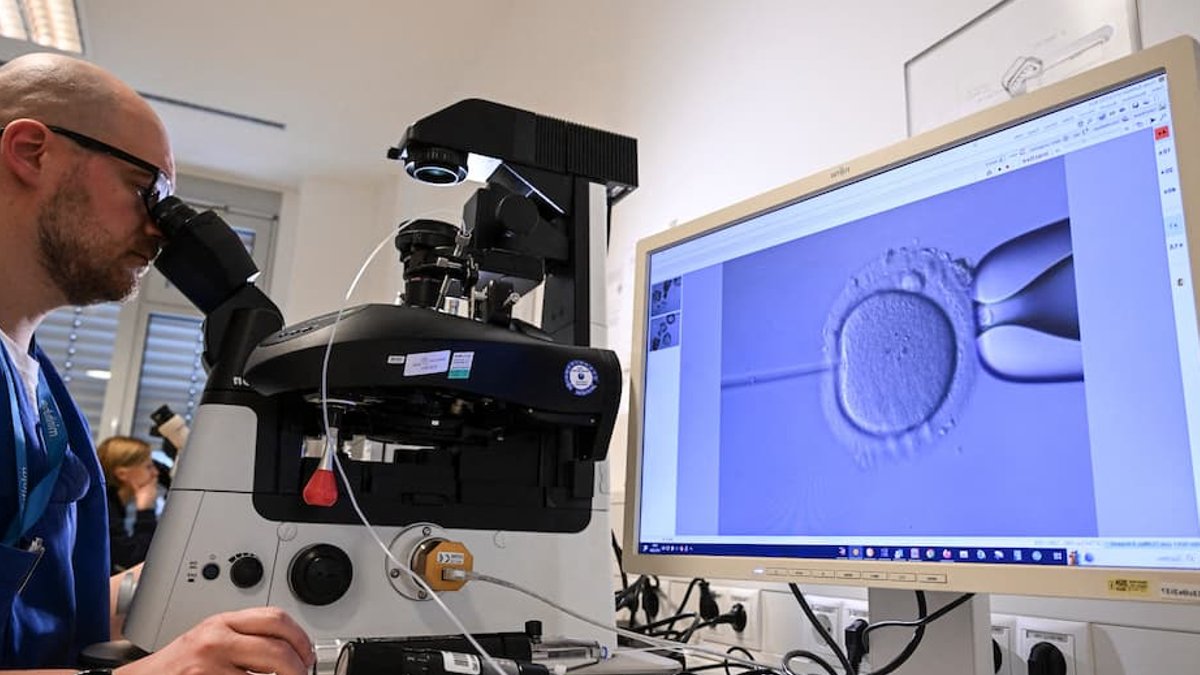
A proposed change to France’s assisted reproductive medicine rules would authorize a genetic test known as preimplantation genetic testing for aneuploidies (PMA-A), a procedure currently banned in the country. The test involves analyzing embryos after they have developed for five days to count their chromosomes. Doctors would then select only those with a normal number of chromosomes, or “euploid” embryos, for transfer, avoiding those with abnormalities like trisomy 21. This approach stands in contrast to the only authorized genetic test in France, which is reserved for rare cases where a specific inherited disease is already identified in the parents.
Legislative Moves and Medical Opinions
French politicians are advancing legislation that would regulate this screening. A draft law, introduced by MP Constance de Pélichy, would restrict the use of the test to women over 35. Its authors argue that without this screening, doctors transfer embryos “blindly,” and that the test could double implantation rates. Health Minister Stéphanie Rist has expressed personal support for legalizing the method, acknowledging it may be a divisive issue but stating that progress is needed on the matter. Meanwhile, the Council of State is expected to rule soon on a clinical trial that was previously invalidated by administrative courts.
The legal push has gained attention through public figures. Marine Tondelier, a presidential candidate, shared her personal experience seeking the test abroad. She said she traveled to Belgium to undergo the procedure and met women who spent around 80,000 euros on the test in European countries where it is allowed. According to her, the test allows for the identification of chromosomal anomalies before freezing.
Scientific Limitations and Ethical Concerns
Questions regarding the test’s reliability have been raised by researchers. Élise Vivar, research director at the Foundation Jérôme Lejeune, notes that identifying an anomaly in a few cells does not necessarily mean the entire embryo will fail to develop. The biopsy is taken from a small sample, and the genetic makeup of those cells may not accurately reflect the whole embryo. This can lead to false positives, where a healthy embryo is discarded because of a localized anomaly. The scientist also points out that embryos have natural mechanisms to correct errors, meaning a diagnosis of aneuploidy is not always a definitive predictor of failure.
Read Also: French right wing candidates discuss subsidiarity at Paris event
Despite these scientific doubts, the technique is marketed as a way to increase implantation chances.
Debates over the policy also focus on ethical boundaries. Odile Téqui, director of the Family Syndicate, questions the implications of this practice.
Legal Review and Public Reaction
The legislative process moves toward the National Assembly. Lawmakers will examine a transpartisan bill early in December. The text aims to legalise the method while establishing specific rules for its use. If passed, the measure would restrict access to women over 35. This age limit targets the demographic most likely to benefit from the screening. The bill also includes prohibitions against sex selection. These restrictions are intended to prevent the misuse of the technology for non-medical reasons.
The Road Ahead for Bioethics
The decision rests with the government and the parliament. Health Minister Stéphanie Rist supports the move, despite the ethical concerns. She frames the issue as one of progress in medical care. However, the Council of State must first rule on the clinical trial. This administrative ruling will set a legal precedent for the proposed law. The Committee for National Ethics is also expected to weigh in before the vote. The outcome of this process will determine the future of PMA-A in France.


Leave a Reply