
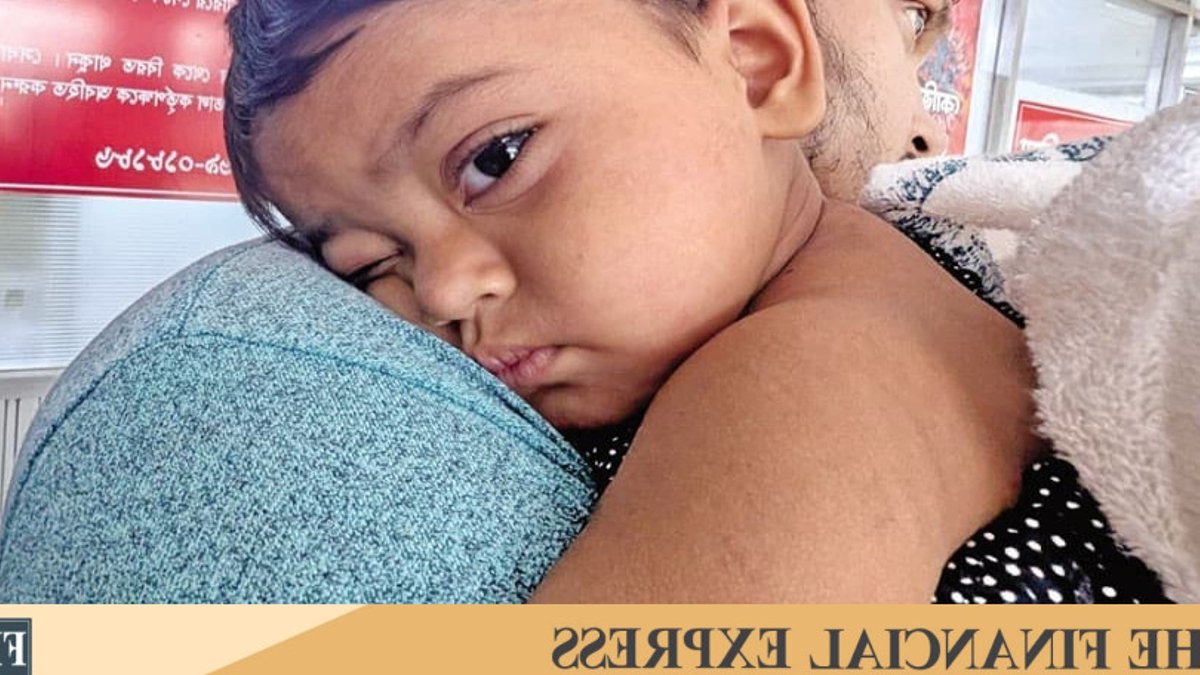
Nearly nine in ten families affected by measles in Bangladesh have borrowed money to cover treatment costs, according to a joint assessment by the Bangladesh Red Crescent Society and the International Federation of Red Cross and Red Crescent Societies.
Borrowing and savings depletion are widespread
The assessment, which surveyed 2,746 families receiving care at 12 government medical colleges and district hospitals, found that 89 % of households took out loans and 61 % exhausted their savings. Every family reported needing financial assistance.
On average, households spent about Tk 16,000 on treatment and related expenses. A small share—4 %—sold assets, while 3 % relied on donations.
Children under four bear the brunt
Seventy‑five percent of patients were four years old or younger; 19 % were between five and 17, and 6 % were over 18. The youngest patients often require prolonged hospital stays, which can strain caregivers’ incomes.
Among respondents, 35 % said medicines were the top priority, followed by water, sanitation and hygiene support at 33 % and food assistance at 22 %.
Occupational data showed 78 % of families depended on informal work, earning between Tk 6,000 and Tk 20,000 a month. This makes them especially vulnerable when illness forces a caregiver to miss work.
Hazera Khatun, who traveled from Rangpur to Dhaka with her 11‑month‑old daughter, said her family had already spent more than Tk 70,000. “Treatment at the government hospital is free, but many other costs are not covered,” she explained, adding that a single ambulance ride cost nearly Tk 20,000.
These figures echo past outbreaks where indirect costs—transport, food, lost wages—proved as burdensome as medical fees. The current surge highlights gaps in social protection that can exacerbate health crises.
Targeted cash assistance and ongoing response
The assessment identified 2,400 of the most vulnerable households for emergency cash assistance of Tk 10,000 each. Dr Kabir M Ashraf Alam, secretary‑general of the Bangladesh Red Crescent Society, said the aid aims to ease the dual pressure of health emergencies and financial hardship.
Alberto Bocanegra, head of the IFRC delegation in Bangladesh, noted that the impact “does not end at the hospital door,” stressing the need for both humanitarian aid and robust social safety nets during public health emergencies.
Supported by IFRC partners, the Bangladesh Red Crescent Society helped the government launch a nationwide measles vaccination campaign and mobilized over 1,000 volunteers for community awareness, vaccination‑site support, and risk‑communication activities.
It is a model similar to the diversification seen in other countries.


Leave a Reply