
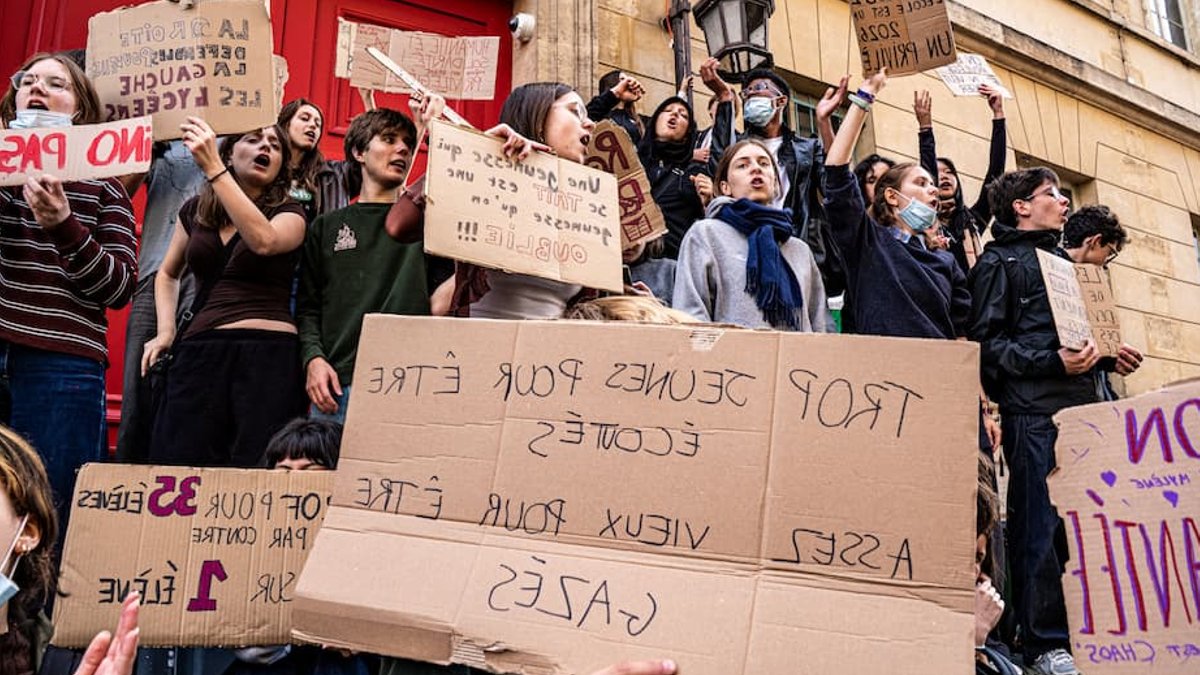
French secondary schools have faced persistent disruptions since the start of the crisis, and a report from the Ministry of Education identifies a significant role for adults in these blockades. Commissioned by Minister Édouard Geffray, the Inspection générale de l’éducation, du sport et de la recherche (IGESR) analyzed the reasons behind the durable closures of 141 high schools across 19 regions. The document, published on Tuesday, November 24, states that the crisis involves both educational staff and political actors in a way that extends beyond the students themselves.
Student background and parental attitudes
The investigation into the student body reveals a specific profile for those involved in the protests. According to the report, these students generally possess a good academic level and come from favored social categories. Their parents often work in sectors like media or intellectual professions, which keeps them politically sensitive. The document notes that some parents adopt a complacent attitude toward their children’s actions, demanding a lack of sanctions and the non-recording of absences. Furthermore, the IGESR confirms that local adults have advised students to structure their movement, indicating that the protests are not entirely student-led.
Read Also: French towns lead with practical eco-solutions
Political influence and logistics
While parents may shield students, the report highlights that school staff sometimes facilitate the organization of the protest. The text indicates that “politicization of students” often occurs in establishments where staff members empathize with the movement. Teachers and assistants (AED) provide direct support by refusing to mark absences or by advocating against all sanctions. This internal division creates tensions among faculty members and complicates the management of the schools.
Direct involvement from political organizations is also evident. Directors report that elected officials and political groups are directly or indirectly involved in the blockades. La France Insoumise (LFI) and Révolution permanente are frequently mentioned in this context. The report details how this support manifests through the provision of premises for making signs, logistical assistance with sound systems and microphones, and the presence of party representatives at school gates. This involvement has been verified by the appearances of Louis Boyard at the Saint-Exupéry high school in Créteil and Bally Bagayoko at the Frédéric-Bartholdi high school in Saint-Denis during mobilizations.


Leave a Reply